Yazhe,Liu
N10018163
In early 2000, the establishment of social media including Facebook and YouTube is part of the transformation of web 2.0, developing from data-based page into a web page that can be participated. (Stevenson, M, 2018) Also, social media is available for money making.( Marwick, A,2013)In the world of fashion industry, social media play a significant role in reshaping the industry, not only help the industry to gain more profits, but alter it into a participatory, accessible industry for the ordinary people. In the following content, the further details will be described including the rise of social media influencer and marketing strategy.
Transformation
Fashion Icons
The first transformation is the emergence of fashion influencer in social media who change the status between brands and consumers because of the participatory culture. Social media users participate in the platforms and they form as a community, which is referred to the concept of participatory culture. One feature of social media is participant that users can involve in the content creation and they can engage in the process by spreading the content in recreation and sharing forms. (Fuchs, 2014). There is rare limitation for users to participate and social media enable them to connect with each other. (Fuchs, 2014) In addition, “participation means that humans have the right and reality to be part of decisions and to govern and control the structures that affect them.” (Fuchs, 2014) Hence, when social media enable users to participate in a variety of content, they are empowered and affect the industry. In the fashion industry, the consumers are reconstructed through digital technology where it produces fashion icons. (Boyd, 2010). By using social media, the consumers are no longer passive because they can involve in the industry, share their look and follow the social media accounts of the fashion magazines to learn the color code and improve their fashion sense. Gradually, they are constructing their own fashion online community that inevitable demand the leader who are the social media influencers and they are recognized by the mainstream fashion industry as fashion icons. (The fashion network, 2018) They share their fashion style in multiple platforms such as Instagram and YouTube and their fans will be inspired by their look and copy it. Thus, social media influencer becomes the leader of the fashion trend and govern the popularity of fashion products, which was impossible in the magazine times. For this reason, fashion brands realize the power of social media fashion icons, they start to cooperate with them.

https://www.glamour.com/story/popular-bags-with-girls-names (Leah Melby Clinton’s image.2015)
Taking Alexa Chung as an example, who have about 3.2 million fans in Instagram, she became an ambassador for brands and have her own name handbag. (Alexa, C, 2019) Through the corporation, the fashion brand becomes more popular and famous, which boost consumption. Generally, the fashion icons as consumers and leader of the audience can participate in the fashion industry and bring the relatively equal relationship between brands and audiences because a fashion trend is governing by what fashion products the social media influencers wear and use.
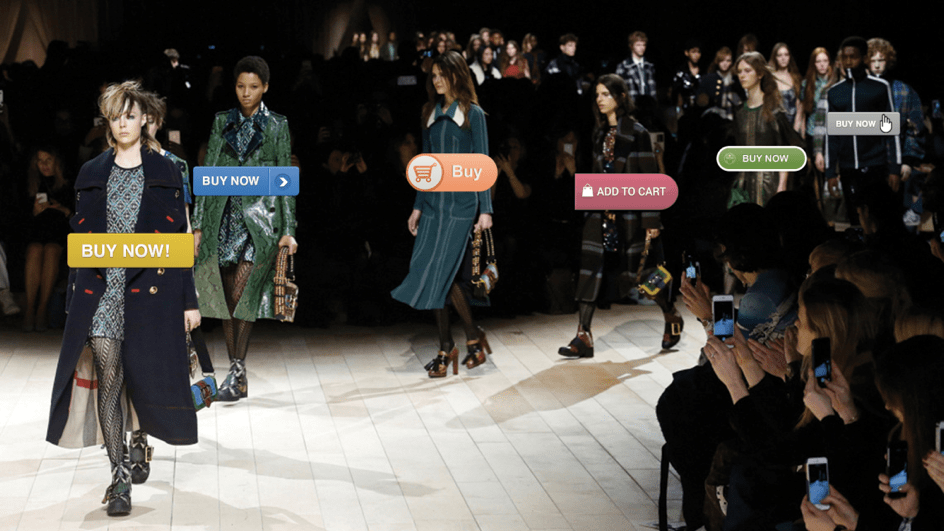
Secondly, the affordances of social media alter the fashion industry into an engaging and interacting industry, particularly affect the marketing strategy of fashion brands. “Affordances of new media have altered the consumption, production, transmission models of entertainment.”(Timothy G, 2019, week5)Moreover, “the concept of affordance is generally used to describe what material artifacts such as media technologies allow people to do.” (Taina and Anne, 2017, p3) Primarily, the limitation of affordances does not strict invisible sense, also, these enable the audience to feel and hear. (Taina and Anne, 2017) It is not about perception but relates to action and interaction. (Gaver, 1996, p114) Besides, affordances can actively be noticed by the audiences and the existence of this is for social interaction. (Gaver, 1996, p114) Therefore, when we discuss the affordances of social media, we need to consider the potential action that has a connection with its user and how user use it to build social interaction. (Taina and Anne, 2017, p3) More importantly, social media affordance should be easy to be comprehended by the audience, when the audience use it, they are not only approaching the afforded action but also view the action with multiple meaning. When new affordance being designed, the further meaning of it can affect the user’s perception and their thoughts will guide them to use affordance in distinct ways. (Taina and Anne, 2017, pp23-24) Hence, the significance of social media affordance have been noticed by many industries, it is a meaningful technology to transform the relationship between industry and customers, its interactive feature help industry has more interaction with their consumer and gains a better understanding of real need from their customers. The fashion industry’s marketing strategy has been altered as they need to cater to the special demand of potential customers and allow their customers to have more engagement with them in social media platform through the affordance. “More and more fashion brands decide to leverage it and broadcast live their fashion shows making them available not only to an exclusive audience but to everyone.” (Mphamquang, 2018) With the assistance of live show affordance in social media platform, users are more likely to engage with the fashion week and express their perspective about the new collection and it contributes to building intimacy relationship with brands. Additionally, the live show has boosted the consumption of the new collection. For example, because the live show is an instant information broadcasting affordance, it functionally allows social media users to interact and engage with the updated content while them viewing it. Thus, a new commercial model in the fashion industry have been come up with, “SEE NOW AND BUY NOW”. (Mphamquang, 2018)
(https://digital-me-up.com/2018/01/06/impact-social-media-fashion-industry-see-now-buy-now-model/) (mphamquang’s image,2018)
Social media platform afford the tags that can insert words and links that directly indicate buy, which will encourage audiences’ desire to purchase. Accordingly, after or while the audience watching the show, they are more likely to purchase fashion products through the tags in their screen that is the link of online shopping website. The words in the tags drive users’ to pay practical action and it feels urging to buy the clothes or shoes that they are more willing to click the link in tags for shopping. Burberry is the first luxury brands to positively use social media and integrate it into their marketing strategy, who have successfully increased the sales by see now and buy now model. (Limei,H ,2016)Their customers watch the show through social media and purchase the products by clicking the tags. In general, because of the two social media affordances (live show and tags), the interactive and intimacy shopping mode improve the sales and users feel more close to the fashion industry.
Conclusion
The fashion industry is reshaped by social media and it has been transformed to adapt to the development of new media. But the fashion industry should not blur the distinctions of social media and advertisement and do not completely commodify social media. (Timothy G, 2019, week5)
Reference List
Alexa C. (2019, February 14). Alexa Chung: my life in clothes. Retrieved from https://www.ft.com/content/af12e92c-29fa-11e9-a5ab-ff8ef2b976c7
Bucher, Taina, and Anne,H. (2017). “The Affordances of Social Media Platforms.” In The SAGE Handbook of Social Media, edited by Jean Burgess, Thomas Poell, and Alice Marwick. London and New York: SAGE Publications Ltd.
Danah, B. (2010). “Social Network Sites as Networked Publics: Affordances, Dynamics, and Implications.” In Networked Self: Identity, Community, and Culture on Social Network Sites (ed. Zizi Papacharissi), pp. 39-58.
Fuchs, C. (2014). Social media as participatory culture. In Social media: A critical introduction (pp. 52-68). London: SAGE Publications Ltd doi: 10.4135/9781446270066.n3
Gaver,WW (1996) Situating action II: Affordances for interaction: The social is material for
design. Ecological Psychology 8(2): 111–129.
Leah Melby Clinton. (2015). The 20 Most Popular Handbag Names of All Time—Do You Have a Bag Named For You? Retrived from https://www.glamour.com/story/popular-bags-with-girls-names
Limei, H. (2016, September 17). How Burberry is Operationalising ‘See Now, Buy Now’ [Web log post]. Retrieved from https://www.businessoffashion.com/articles/intelligence/how-burberry-is-operationalising-see-now-buy-now
Marwick, A. (2013). “Introduction.” In Status Update: Celebrity, Publicity and Branding in the Digital Age, 1-19. New Haven, CT: Yale University Press.
Mphamquang. (2018, January 6). The Impact of Social Media on The Fashion Industry: The “See Now Buy Now” Model [Digital Me Up]. Retrieved from https://digital-me-up.com/2018/01/06/impact-social-media-fashion-industry-see-now-buy-now-model/
The Fashion Network. (2018). How Social Media Has Changed the Game in the Fashion Industry. Retrieved from https://thefashionetwork.com/how-social-media-has-changed-the-game-in-the-fashion-industry/
Timothy, G. (2019) KCB206: Social media, self and society: week5 Lecture Notes. Retrieved from https://blackboard.qut.edu.au/webapps/blackboard/content/listContent.jsp?course_id=_142802_1&content_id=_7846358_1
Stevenson, M. (2018). From hypertext to hype and back again: exploring the roots of social media in early web culture. In J. BurgessA. Marwick & T. Poell The sage handbook of social media (pp. 69-88). 55 City Road, London: SAGE Publications Ltd doi: 10.4135/9781473984066.n5

 Yazhe's blog